Meet the Expert: Tom Munro (40 Years in Stone)
My name is Tom Munro, and I’ve been in the tile and stone business since 1984. I founded Supreme Surface, Inc. in 1996, and for the past 15 years, I’ve specialized in surface care.
As a stone specialist, I talk daily with homeowners, fabricators, and industry pros. I constantly hear stories that bust the myths pushed by quartz marketers—especially about stains on white quartz countertops.
Biggest Quartz Myth: “Non-Porous = Stain-Proof”
Quartz countertops are marketed as durable, non-porous, and low-maintenance. The truth? They’re mostly right—but not indestructible.
- “Non-porous = stain-proof?” Wrong. Spills can etch or stain if ignored.
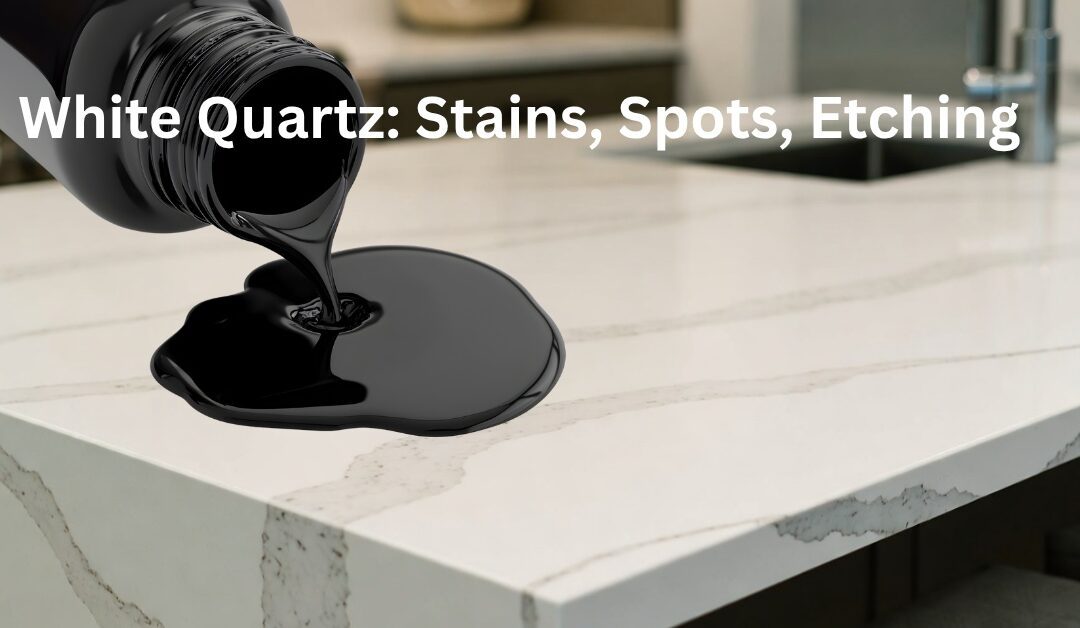
- White quartz shows every blemish, spot, or etch mark—frustrating thousands of homeowners.
I’ve seen it all: stained countertops ruined by coffee, wine, or even tap water left to evaporate.
Why White Quartz Stains: The Hidden Resin Flaw
Yes, quartz is durable—but not invincible. Here’s what damages it:
- Stains and etching from acidic spills (wine, lemon, vinegar, harsh cleaners).
- Discoloration from excessive heat, UV rays, or chemicals.
- Chips from impacts.
- Cracks from thermal shock or movement.
The #1 culprit? Unsaturated polymer resin in manufacturing.
- Pro: Makes quartz non-porous.
- Con: Weakest link—melts under heat, etches with acids, wears from abrasives like Magic Erasers.
Protect Your Quartz: 2 Dead-Simple Steps
Prevention beats cure. Follow these for spotless white quartz forever:
- Wipe spills immediately—even tap water. Use mild soap + water, always rinse + wipe dry.
Realistic? Most skip this. - Upgrade your game: Spray on Supreme Surface® Granite, Quartz & Marble Treatment with ioSeal®—the all-in-one cleaner, polish, and protector against water spots, stains, and etching.
Bottom line: Quartz rocks—when protected right. Stop the myths. Start protecting today with ioSeal®.
Questions? Email, text, or call [317.865.0000] — I’m here to help!
FAQ: Do White Quartz Countertops Stain? (Quick Answers)
- Can white quartz stain permanently? Yes — if acidic products and spills sit too long. NSF confirms resin vulnerability. Learn “The Truth About White Quartz: Why it Stains & How To Protect It“
- Is sealing quartz necessary? — Technically no, but ioSeal® adds a protective shield against common spots, stains, and blemishes. Learn “What Is ioSeal“
- Will Magic Eraser ruin quartz? Yes — micro-abrasions dull the finish over time.
Sources: EPA on polymer resins | NSF Quartz Safety Guidelines